Building a First-Party Data Strategy
Beyond third-party data
As access to third-party data becomes more constrained, first-party data is your best opportunity to build a stronger, more direct understanding of your customers. However, those better insights happen because of a thoughtful approach to what you collect, how you earn customer trust and how you put what you learn into action.
The goal isn’t to know everything about everyone. It’s to know what matters, use it well and give customers a better reason to engage with your brand.
- Why third-party data is no longer enough
- What is first-party data, and why does it matter?
- How do you build an effective first-party data strategy?
- Can first-party data improve audience segmentation and personalization?
- Keep privacy and responsible data use at the center
- Build a data foundation that works for your brand
Why third-party data is no longer enough
Third-party data can be a great way to expand your reach and discover new audiences. For years, marketers have used it to better understand consumer interests, behaviors and demographics beyond what they can learn from their own data.
The downside is that brands don't have much control over where that information comes from or how often it's updated. Someone who matched a target audience six months ago may not fit today. Add changing privacy expectations and requirements to the mix, and it's clear why marketers also need to pay closer attention to how audience data is sourced and used.
Another major challenge is differentiation. If your competitors can access similar audience data, those insights alone may not give your brand much of an edge. Knowing that someone fits a particular demographic or has shown interest in a product category doesn’t necessarily tell you why they would choose your brand over another.
Now, this doesn’t mean third-party data has no place in your strategy. It can still help expand reach, inform prospecting and provide useful context when it’s appropriately sourced and fit for purpose. But it works best alongside a strong foundation of first-party data.

What is first-party data, and why does it matter?
First-party data is information a brand collects directly through its own customer relationships and touchpoints. This can include website behavior, purchase history, email engagement, customer feedback, stated preferences and CRM records. Unlike generalized audience profiles, these findings come from interactions with your own audience.When used strategically, first-party data can inform decisions across the customer journey:
- Acquisition: Understand which content, offers and interactions attract valuable prospects.
- Conversion: Identify friction points and opportunities to improve the customer experience.
- Retention: Recognize engagement patterns and opportunities to strengthen customer relationships.
- Loyalty: Better understand preferences, repeat behavior and long-term customer value.
How do you build an effective first-party data strategy?
Before investing in new tools or collecting more customer information, start by understanding what you want to learn, why it matters and how those insights will inform marketing decisions. Here’s how to build a foundation that connects customer understanding to meaningful business outcomes.Start with clear business objectives
Your business priorities should be guiding your strategy. Whether the priority is improving conversion rates, increasing retention or delivering more relevant experiences, those objectives should guide what your team needs to learn. Identify which customer patterns could help achieve those goals and how you’ll measure success.Identify what data to collect
Once your targets are clear, map the customer journey to identify where data can help answer important questions, from a prospect’s first interaction to repeat purchases and ongoing engagement. Prioritize information that directly supports your objectives, separating essential data from details that are simply nice to have.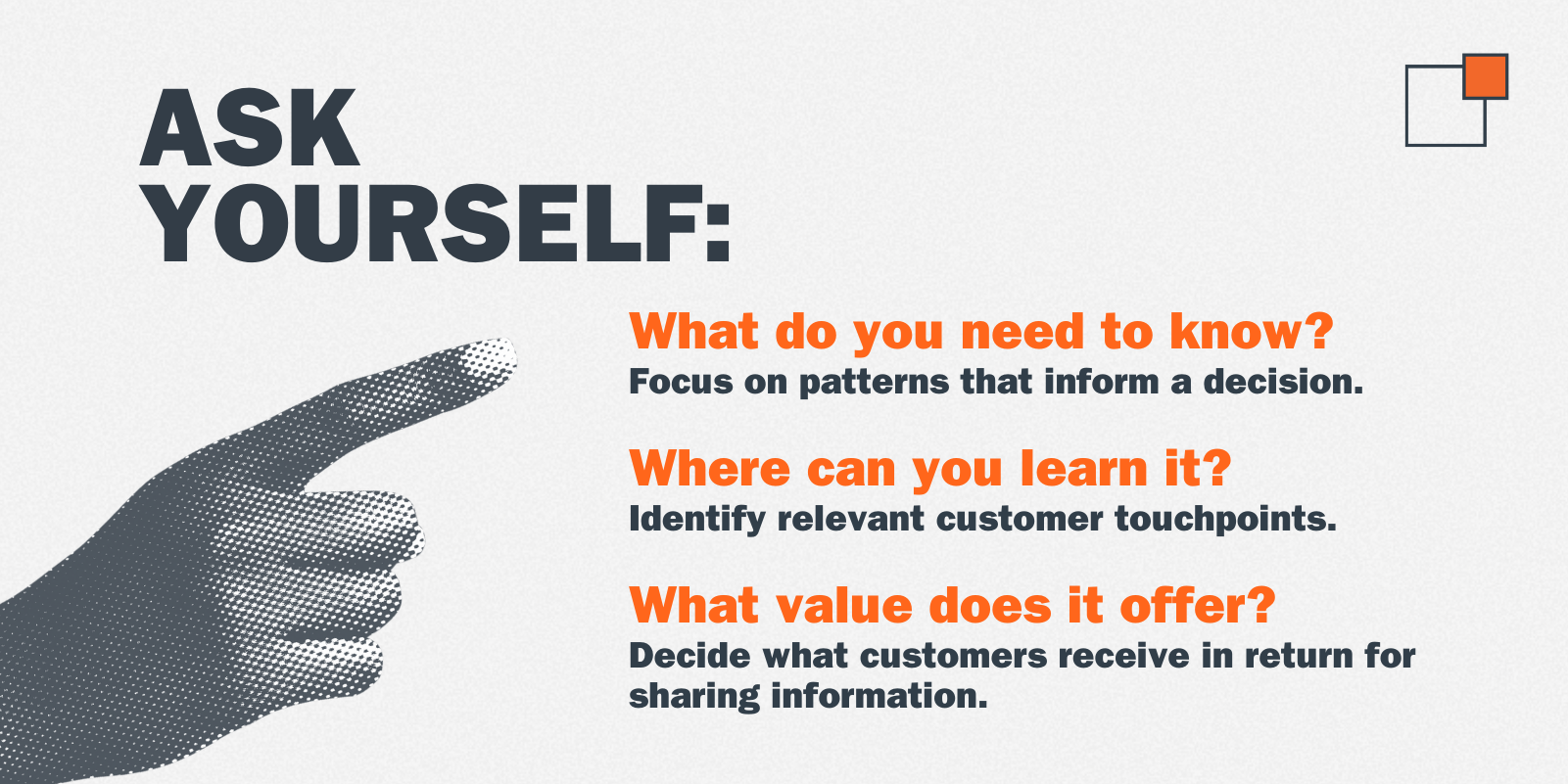
Common types of first-party data to consider include:
- Contact information: Email addresses, names and other voluntarily shared details.
- Website behavior: Pages visited, content viewed and actions taken.
- Purchase history: Products purchased, order frequency and spending patterns.
- Email and campaign engagement: Clicks, responses and other meaningful interactions.
- Customer preferences: Stated interests, communication choices and product preferences.
- Customer feedback: Survey responses, reviews and direct feedback.
- CRM records: Customer interactions, service history and relationship details.
Make the value exchange worth it
Customers are more likely to share information when they understand why it’s worth sharing. Whether that means more relevant content, useful resources, tailored recommendations or better service, the benefit should be clear.Brands can also ask for information progressively, building understanding over time instead of requiring too much upfront. There’s a difference between collecting information because you can and earning it because customers see a reason to share. The latter builds a stronger foundation for lasting relationships.
Choose technology that supports the strategy
The right technology helps brands organize, understand and activate customer data. Depending on an organization's needs, that might include:- CRM systems: Manage customer records, interactions and relationship history.
- Customer data platforms (CDPs): Help unify customer data from multiple sources.
- Analytics platforms: Reveal behavior patterns and campaign performance.
- Marketing automation: Support timely, relevant communications and journeys.
- Consent management tools: Help manage customer permissions and preferences.
Activate insights across marketing channels
Customer data becomes more valuable when it informs the experiences people have with your brand. Insights can help shape targeting, messaging, timing, offers and customer journeys across email, websites, paid media, content and marketing automation. Be consistent. Customers shouldn’t receive disconnected messages or conflicting offers simply because different channels operate from different information.Testing is just as important as activation. Evaluate campaigns and personalized experiences against your original goals, then use the results to refine audience segments, messaging and future data collection. This creates a feedback loop that helps your strategy get smarter over time.
Can first-party data improve audience segmentation and personalization?
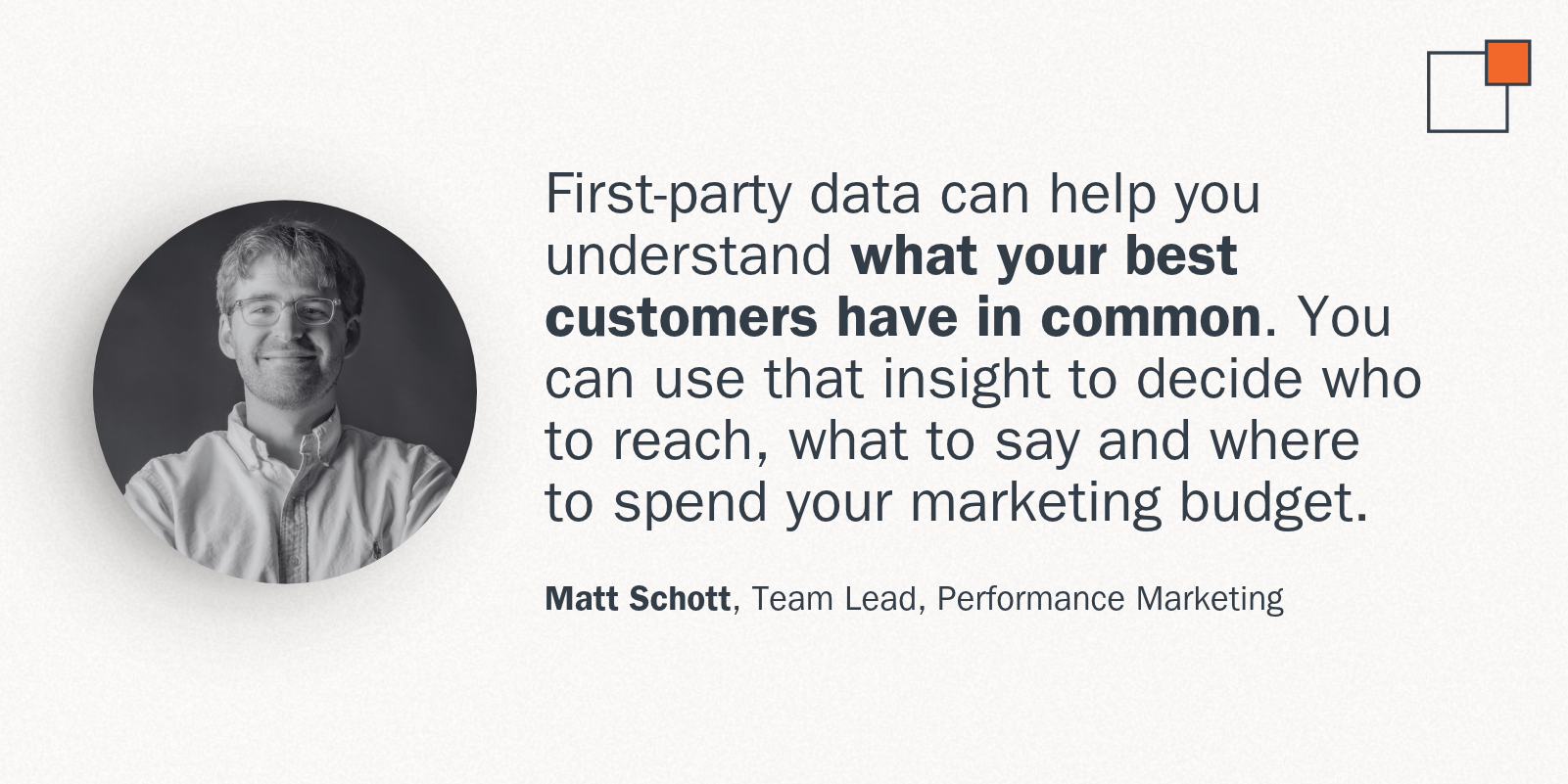
First-party data helps marketers move beyond broad demographic assumptions and build a clearer picture of what customers actually value and respond to. Instead of treating everyone in an audience the same way, brands can use customer data to create more meaningful segments and tailor experiences accordingly.Matt Schott, thunder::tech’s Performance Marketing Team Lead, explains, “First-party data can help you understand what your best customers have in common. You can use that insight to decide who to reach, what to say and where to spend your marketing budget.”
Some useful approaches include:
- Behavioral segmentation: Group customers based on browsing activity, engagement or purchase behavior.
- Lifecycle segmentation: Tailor messaging based on where someone is in their relationship with your brand, from prospect to repeat customer.
- Preference-based segmentation: Use stated interests and communication preferences to deliver more relevant content and offers.
- Value-based segmentation: Identify groups based on customer value and business objectives to inform marketing priorities.
Keep privacy and responsible data use at the center
Collecting data is the easy part. The real value comes from how it's handled afterward. Transparency, appropriate consent, data minimization, security, retention practices and respect for communication preferences should be built in from the start.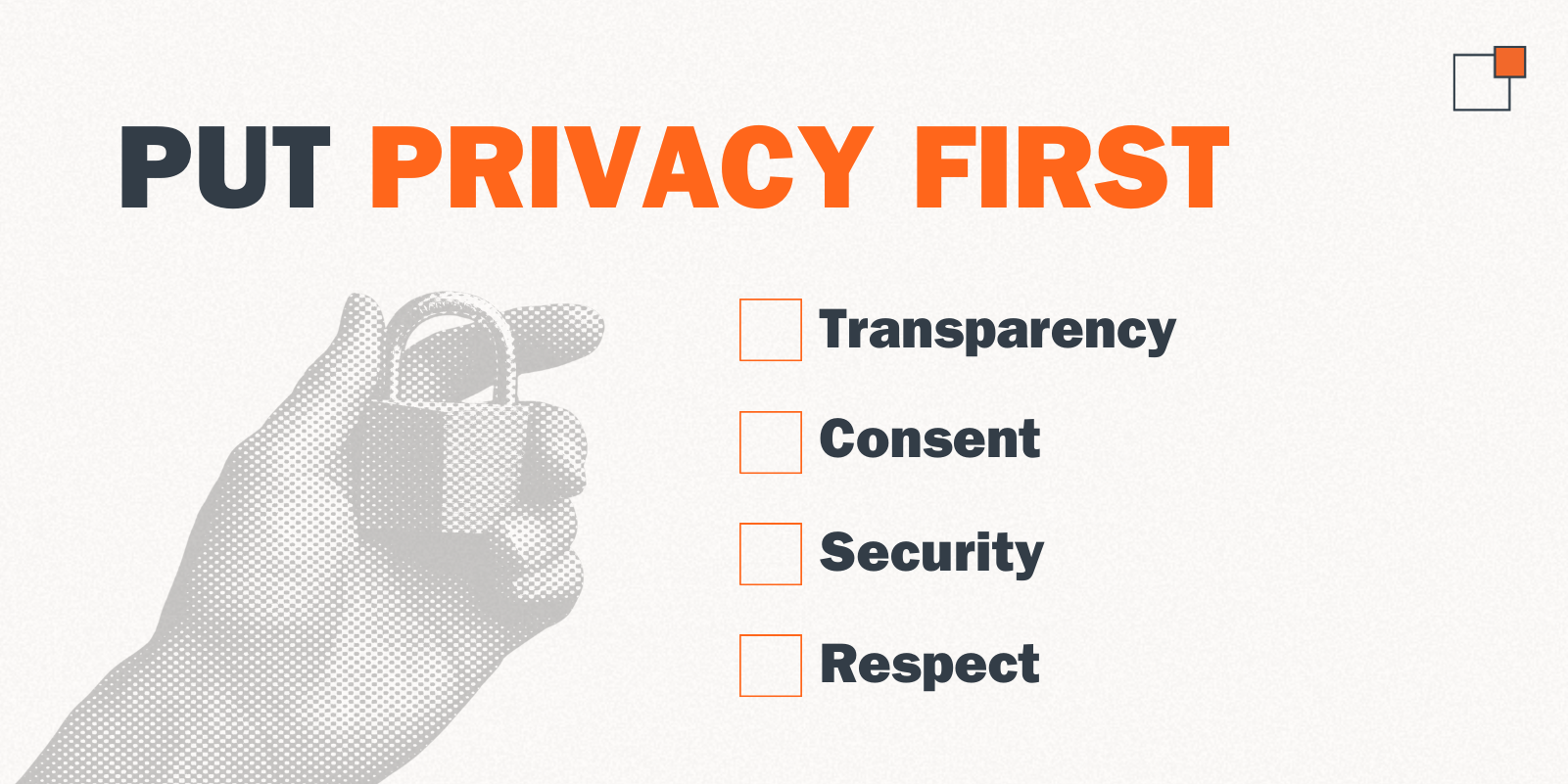
Consider the customer expectations behind each interaction. A customer may share information for one purpose without expecting it to be used in every possible way. Using data in ways that feel unexpected or conflict with those expectations can undermine trust, even when the information was collected directly.
Build a data foundation that works for your brand
First-party data is most valuable when it helps brands understand their customers and make better marketing decisions. That starts with knowing what you want to achieve, collecting meaningful information and using what you learn in ways that earn trust and improve the customer experience.You don’t need to have every piece in place to get started. Begin by looking at what you know about your audience, where the gaps are and how better insights could help you serve customers more effectively. Then keep learning, testing and refining your approach.
Your customer data has a job to do. Let’s make sure it’s getting it done. Connect with thunder::tech to build a strategy that drives more relevant marketing and stronger results.

About the Author
Lexie Febel is a Content Specialist at thunder::tech. Her favorite pastime includes being cozied up with her cats while getting lost in the pages of a compelling book.