How to Know If You’ve Gone Off-Brand
Some signs of going “off-brand” are obvious; imagine if The New York Times swapped its reserved color palette for neon gradients or if Wendy’s toned down their snarky voice to be more buttoned-up and corporate. Consumers would be up in arms, and we’d have another Cracker Barrel debacle on our hands.
Most of the time, a big flop doesn’t come out of nowhere but with brand guidelines slowly falling to the wayside. Maybe tones have started to shift, or an employee is still using an outdated template. Before you know it, you’ve created a murky breeding ground for off-brand assets.
So how do you know if a piece of content has taken things a step too far before you’ve utterly confused your audience?
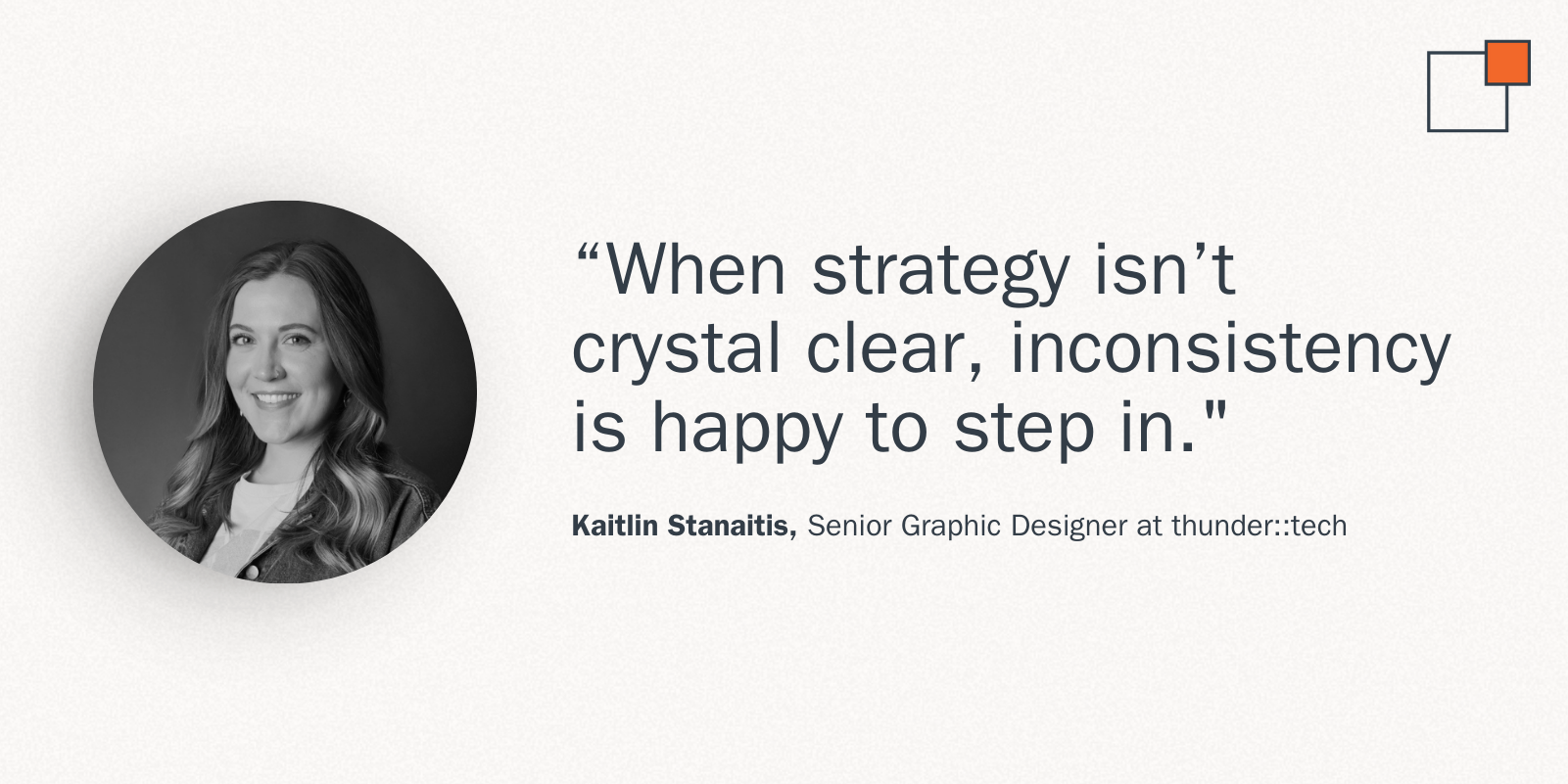
Because you know what happens when you assume... you get confusing brands.
It’s important to note that this kind of drift is natural! It doesn’t mean your original branding was wrong; it just no longer represents the current market.
If leadership talks about the brand differently from how it shows up on social or in a sales deck, it’s time to reevaluate.
The bigger problem we see is that some companies don’t take the time to ask in the first place and never realize they even have a problem. It’s so important to remember that branding doesn’t have a “completion” date but is as living and breathing as every employee.
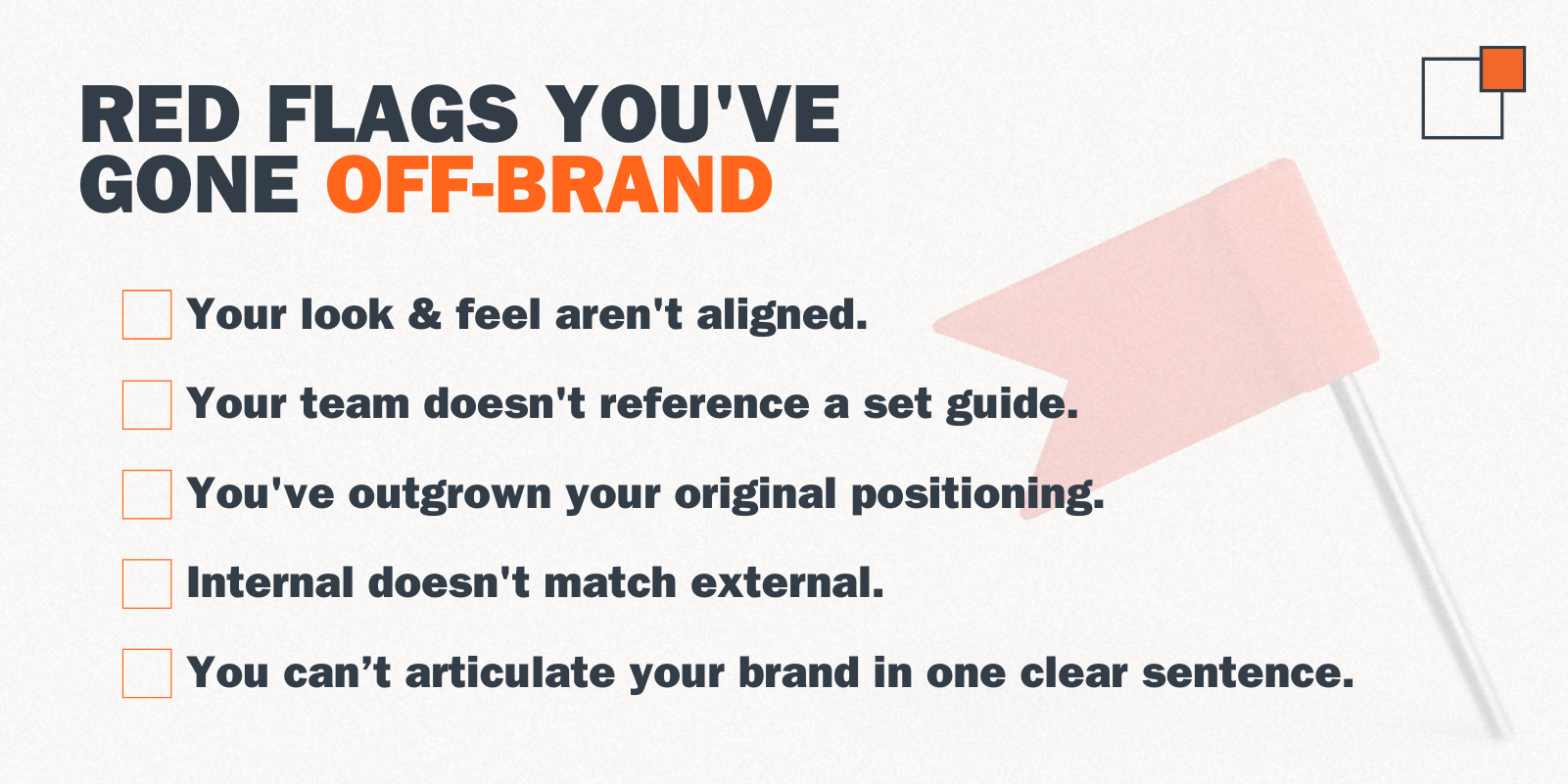
We’ve compiled a list of the less glaring signs that should be nipped in the bud ASAP:
Lay them out side by side and look for consistency in:
If assets look related but not unified, visual drift is likely at play.
Pay attention to tone, language and positioning. Are you confident in some places and vague in others? Casual here, corporate there?
Identify what’s changed in your business over the last 12–18 months:
Now ask: Does our current brand narrative reflect who we are today—or who we used to be? If your positioning hasn’t kept pace with your evolution, your brand may be telling an outdated story.
Where do things feel inconsistent? What shows up repeatedly? The goal isn’t to assign blame; it’s to understand how and where drift is happening so you can address it strategically.
Then, consolidate what remains into a single, easy-to-access brand library. When teams can quickly find the right assets, consistency becomes the path of least resistance.

Here are a few indicators of when you should call us in:
Bringing in an agency isn’t about handing over the keys—it’s about gaining a partner. The right team helps clarify, refine and document your brand so your internal teams can move forward with confidence.
And you’re not alone. Going off-brand is more common than most companies realize—we’ve even had to refresh our own brand not too long ago. It’s part of evolving.
If you’re starting to notice signs of drift and want a clearer picture of where your brand stands, that’s exactly where we come in. Sometimes all it takes is a fresh perspective, a thoughtful audit or a conversation to bring everything back into alignment.
If this sparked a few “Ope, that sounds like us” moments, let’s compare notes. Our branding team would be thrilled to chat—hit us up today!

Most of the time, a big flop doesn’t come out of nowhere but with brand guidelines slowly falling to the wayside. Maybe tones have started to shift, or an employee is still using an outdated template. Before you know it, you’ve created a murky breeding ground for off-brand assets.
So how do you know if a piece of content has taken things a step too far before you’ve utterly confused your audience?
Ways Brands Drift Without Realizing It
We’ve broken it down for you, highlighting the most glaring mistakes as well as the common red flags we often see overlooked:1. Your look & feel isn’t speaking the same language.
This is the most common culprit—and the easiest to spot. Colors that are a shade or two off, logo variations being used interchangeably or social assets that don’t even remotely resemble your website. As you grow and adopt different channels, the risk of visual drift grows along with them.2. Your team is making branding decisions based on guesswork.
At the end of the day, your brand guidelines should be gospel. Solid brand guides are based on extensive research and strategic decisions that are clearly outlined, leaving no room for “interpretation.” If questions arise, there should be a designated brand manager or team that decisions should be deferred to.Because you know what happens when you assume... you get confusing brands.
3. You've outgrown your original positioning.
As your company evolves, your brand should evolve with it. You may be offering new products, serving new audiences or standing for new values, but if your brand story still reflects who you were years ago, the disconnect becomes obvious. Not only will employees feel it, but so will your customers.It’s important to note that this kind of drift is natural! It doesn’t mean your original branding was wrong; it just no longer represents the current market.
4. Internal doesn’t match external.
Another clear indicator of brand drift is misalignment between the brand's promise and its experience. Internally, teams may believe the brand stands for innovation, partnership or premium service. Externally, customers may experience something entirely different. That gap isn’t just a messaging issue—it’s a brand issue.If leadership talks about the brand differently from how it shows up on social or in a sales deck, it’s time to reevaluate.
5. You can’t articulate your brand in one clear sentence.
If five employees describe your brand five different ways, messaging becomes fragmented, campaigns feel disjointed and your brand starts to lose its identity. Strong internal alignment leads to natural external consistency.The bigger problem we see is that some companies don’t take the time to ask in the first place and never realize they even have a problem. It’s so important to remember that branding doesn’t have a “completion” date but is as living and breathing as every employee.
Telltale signs you’re officially “off-brand” 🚩
Unfortunately, there is no “buckle your seat belt” alarm when your brand goes off-roading. It happens in much more subtle ways—think of the low windshield wiper fluid or tire pressure light. Signals that can be incredibly easy to say, “I’ll deal with it later.” Don’t.We’ve compiled a list of the less glaring signs that should be nipped in the bud ASAP:
- Your team can't answer “What makes us different?” the same way.
- No one’s quite sure where your brand guidelines live.
- Your social feeds feel like five different brands fighting for custody.
- Templates keep multiplying because no one knew originals existed.
- Customers describe you in ways that don’t match how you position yourself internally.
- Your marketing feels harder than it should be.
How to Self-Audit Your Brand in 30 Minutes
While the list above is great to always keep in mind, you should be dedicating time to intentionally audit your brand and spot any potential weak spots:1. Visual gut check
Start by pulling your last 10 pieces of marketing content. This could include social posts, ads, sales decks, emails, landing pages or presentations—anything customer-facing.Lay them out side by side and look for consistency in:
- Brand colors and shades
- Typography choices
- Logo usage and placement
- Imagery style, illustration or photography
If assets look related but not unified, visual drift is likely at play.
2. Voice & messaging check
Next, compare how your brand sounds across key touchpoints:- Site copy
- Recent social posts
- Email campaigns or newsletters
Pay attention to tone, language and positioning. Are you confident in some places and vague in others? Casual here, corporate there?
3. Positioning & relevancy check
Finally, zoom out and look at the bigger picture.Identify what’s changed in your business over the last 12–18 months:
- New products or services
- New audiences or markets
- Shifts in values, priorities or goals
- Growth in size or complexity
Now ask: Does our current brand narrative reflect who we are today—or who we used to be? If your positioning hasn’t kept pace with your evolution, your brand may be telling an outdated story.
How do you get back on track?
Alright—if you’ve spotted a few red flags, don’t panic. Brand drift is common, especially in growing organizations. The good news? Getting back on track doesn’t require burning everything down. It starts with clarity, intention and a few smart resets.1. Start by conducting a deeper brand audit
Begin by reviewing your most visible brand touchpoints—messaging, visuals, website, social channels and sales collateral. Look for patterns, not perfection.Where do things feel inconsistent? What shows up repeatedly? The goal isn’t to assign blame; it’s to understand how and where drift is happening so you can address it strategically.
2. Revisit (or define) your core brand elements
Every strong brand is built on a clear base, including your messaging foundation and visual identity, which should be defined in your brand guide. If you don’t have a brand guide, or pieces like your purpose, positioning, typography and colors are missing, this is the time to build them.3. Refresh any outdated assets
Old assets have a way of sticking around long after they should. Eliminate outdated logos, templates and files that no longer represent the brand.Then, consolidate what remains into a single, easy-to-access brand library. When teams can quickly find the right assets, consistency becomes the path of least resistance.
4. Communicate the brand internally
Brand success depends on adoption across the entire organization—not just the marketing team. Share updates clearly, provide training where needed and make sure employees understand not just what the brand looks like, but why it exists and how to represent it.When it might be time to bring in outside help
Sometimes, the smartest move is knowing when to bring in an outside perspective. When alignment, bandwidth or objectivity become limiting factors, a strategic partner can help reset the foundation and guide what comes next.Here are a few indicators of when you should call us in:
- Inconsistency feels overwhelming.
- You don’t have internal bandwidth to audit and realign.
- Brand evolution requires an objective perspective or creative expertise.
- The brand has evolved faster than the documentation.
- Internal teams disagree on direction.
- Executing across channels feels chaotic.
- You’re ready for a more integrated, future-facing identity.
Bringing in an agency isn’t about handing over the keys—it’s about gaining a partner. The right team helps clarify, refine and document your brand so your internal teams can move forward with confidence.
Before you go
Growth, new teams, new channels and new priorities naturally pull brands in different directions if you’re not actively checking in. The important part isn’t avoiding drift entirely; it’s recognizing when it’s happening and knowing how to respond.And you’re not alone. Going off-brand is more common than most companies realize—we’ve even had to refresh our own brand not too long ago. It’s part of evolving.
If you’re starting to notice signs of drift and want a clearer picture of where your brand stands, that’s exactly where we come in. Sometimes all it takes is a fresh perspective, a thoughtful audit or a conversation to bring everything back into alignment.
If this sparked a few “Ope, that sounds like us” moments, let’s compare notes. Our branding team would be thrilled to chat—hit us up today!
About the Author
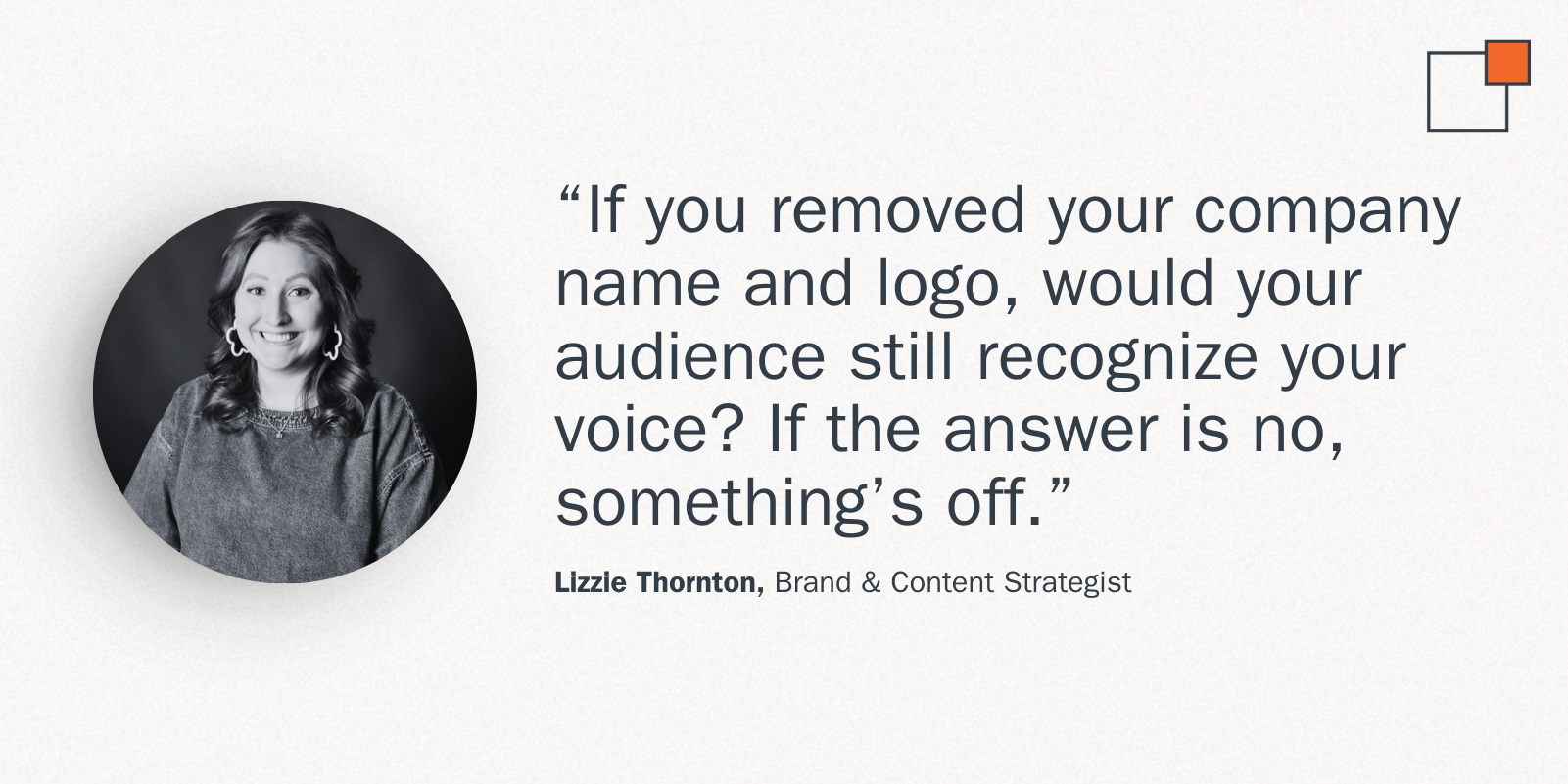
Lizzie Thornton is a Brand & Content Strategist at thunder::tech. When she's not writing strategic content or crafting brand messaging, she spends her time watching true crime documentaries and saying "hi" to every dog she meets.