How AI Search Shapes Brand Reputation
(And What to Do About It)
Nobody told you there was a credit score for your brand. But there is! It's being calculated right now, using data points you've likely never thought to manage.
AI answer engines like Perplexity, ChatGPT and Google's AI Overviews don't ask your brand what it stands for. They look at everything else (think forum threads, podcast transcripts, directory listings, third-party reviews and citations from sources you haven't touched in years). Then they render a verdict.
That verdict is increasingly what people find first. And most brands are losing points on factors they don't even know are being scored.
What's actually calculating your brand's reputation score?
Traditional brand reputation management focused on the inputs you controlled: your website copy, social profiles and Google Business Profile. You managed the front door and hoped for the best.AI search doesn't work like that. It works more like an underwriter, cross-referencing dozens of independent sources to build a comprehensive picture of your brand's credibility and authority.
If those signals are weak or absent, the AI fills in the gaps. Often inaccurately. And that inaccuracy gets served to your potential customers as a confident, cited answer. It's a brand digital presence problem, but it is fixable once you know which channels matter.
Why is this different from traditional SEO?
Search engines rank pages. AI engines synthesize reputations. Ranking on Google means one page is prioritized for one query. But an AI engine pulls from review sites, LinkedIn articles and forum answers (all at once) to decide how to describe your brand. You're not optimizing a page. You're managing a file.What channels are contributing to your brand score?
Most brands think reputation management means monitoring tagged social mentions and responding to Google reviews. But AI systems are pulling from a much broader set of conversations—many of which brands never actively monitor.Reddit, Quora, YouTube comments, niche forums, podcast transcripts and third-party review platforms all contribute to the broader picture AI engines build about your company. These channels matter because they contain authentic, unfiltered language. When enough people repeatedly describe your brand the same way, AI systems begin recognizing those patterns as reputation signals.
In other words: even if your marketing team never sees the conversation, AI probably has.

Which sources does AI trust the most?
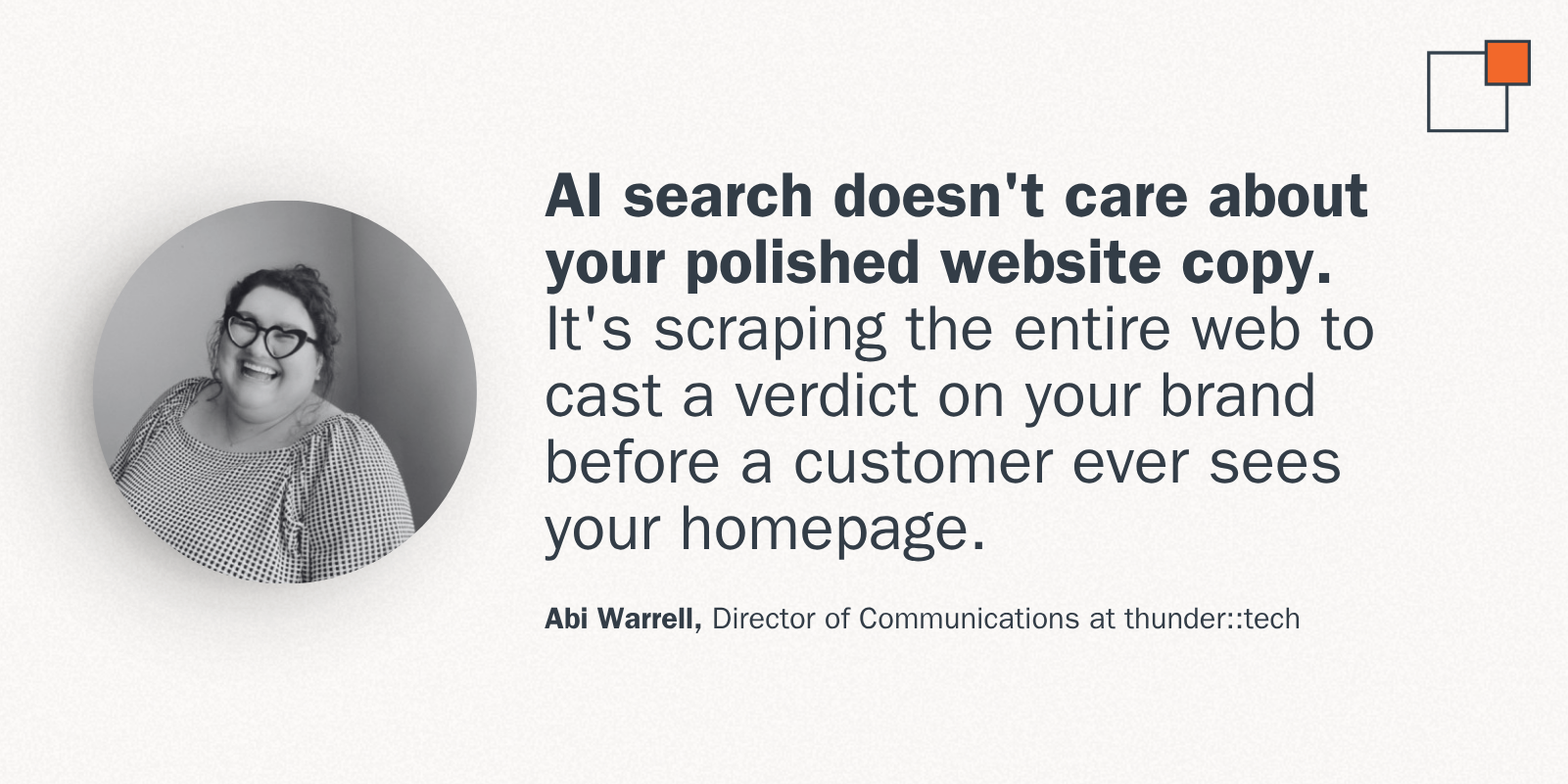
AI engines read brand signals similar to how a credit bureau assesses financial behavior. A passing mention in a social post? That's a small transaction at best, barely registering on its own.Abi Warrell said it best, “AI search doesn't care about your polished website copy. It's scraping the entire web to cast a verdict on your brand before a customer ever sees your homepage. If you aren't aggressively managing your collective digital file, you're letting the algorithm define you.”
What actually builds reputation equity is the stuff that takes time and intention: a detailed feature in a respected industry publication, genuine customer reviews and consistent third-party validation. Those are your long-standing lines of good credit.
Once you understand which signals AI systems actually value, you stop chasing scattered brand activity and start building something that compounds over time.
Think of it like a credit report. Not all signals carry equal weight.
Primary credit lines = Original sources and citation anchors
This is the strongest signal you can have. When your brand produces original data, research or insights that others cite, you’re effectively opening a high-value long-term credit line. AI systems track where information originates and assign more weight to the source that others reference. This is why original research consistently outperforms even high-quality opinion content. It becomes the foundation others build on.Verified accounts = Established editorial and trade publications
A mention in a recognized industry publication functions like a verified account on your credit report. It carries authority because of editorial standards and gatekeeping. Even a brief inclusion in a trusted outlet can outweigh dozens of lower-quality mentions. These placements signal that your brand has passed an external credibility check.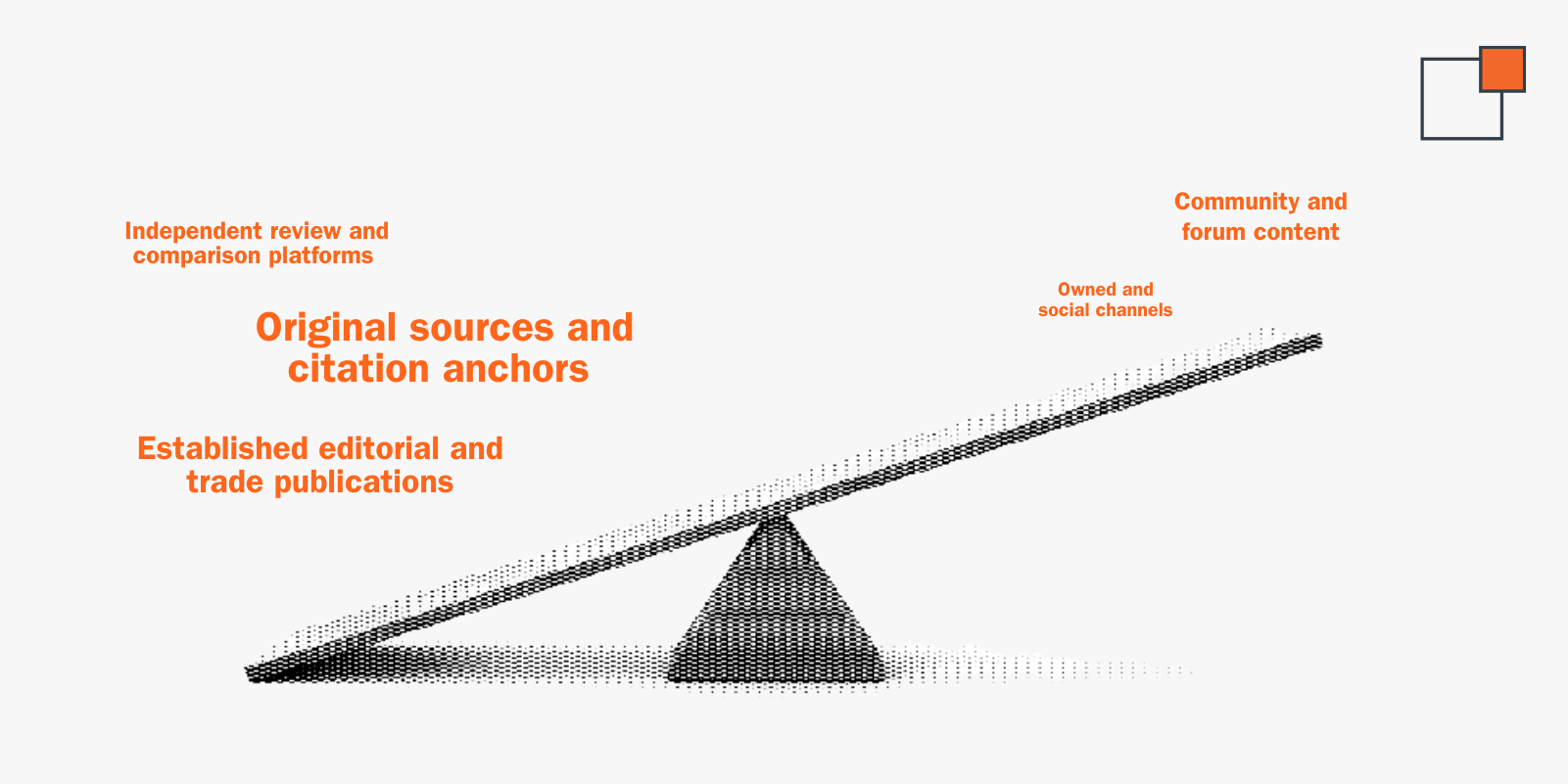
Payment history = Independent review and comparison platforms
Platforms like G2, Capterra, Trustpilot and Clutch act as your payment history, a steady record of real customer experiences over time. AI systems rely heavily on these sources for high-intent queries, especially comparisons. A brand with a robust profile and consistent reviews will almost always outperform one without, regardless of product quality.Peer signals = Community and forum content
Reddit, Quora and niche forums function like peer-reported activity. They may not carry the same weight as verified sources but they provide something equally important: authenticity. AI systems treat repeated consistent sentiment across these platforms as a strong trust signal. One-off mentions don’t matter, but patterns do.Self-reported information = Owned and social channels
Your website, LinkedIn page and social profiles are the equivalent of self-reported data. They matter, but they carry the least weight in shaping AI perception. A brand that only manages its own channels is essentially submitting a credit report made up entirely of its own claims, which AI systems naturally discount.The practical takeaway: build your brand like you’re building credit. Most brands invest the majority of their effort in what’s effectively self-reported data and short-term activity, then wonder why AI-generated answers about them feel thin or inaccurate. The brands that outperform are actively strengthening their credit profile: publishing original research, earning placements in trusted publications and building consistent third-party validation
How to audit your brand’s current “score”
You can’t optimize what you haven’t seen. And with AI-driven reputation, your brand doesn’t live in one place; it’s the sum of how you’re described everywhere else.A quick audit can give you insight to the version of your brand that AI already believes.
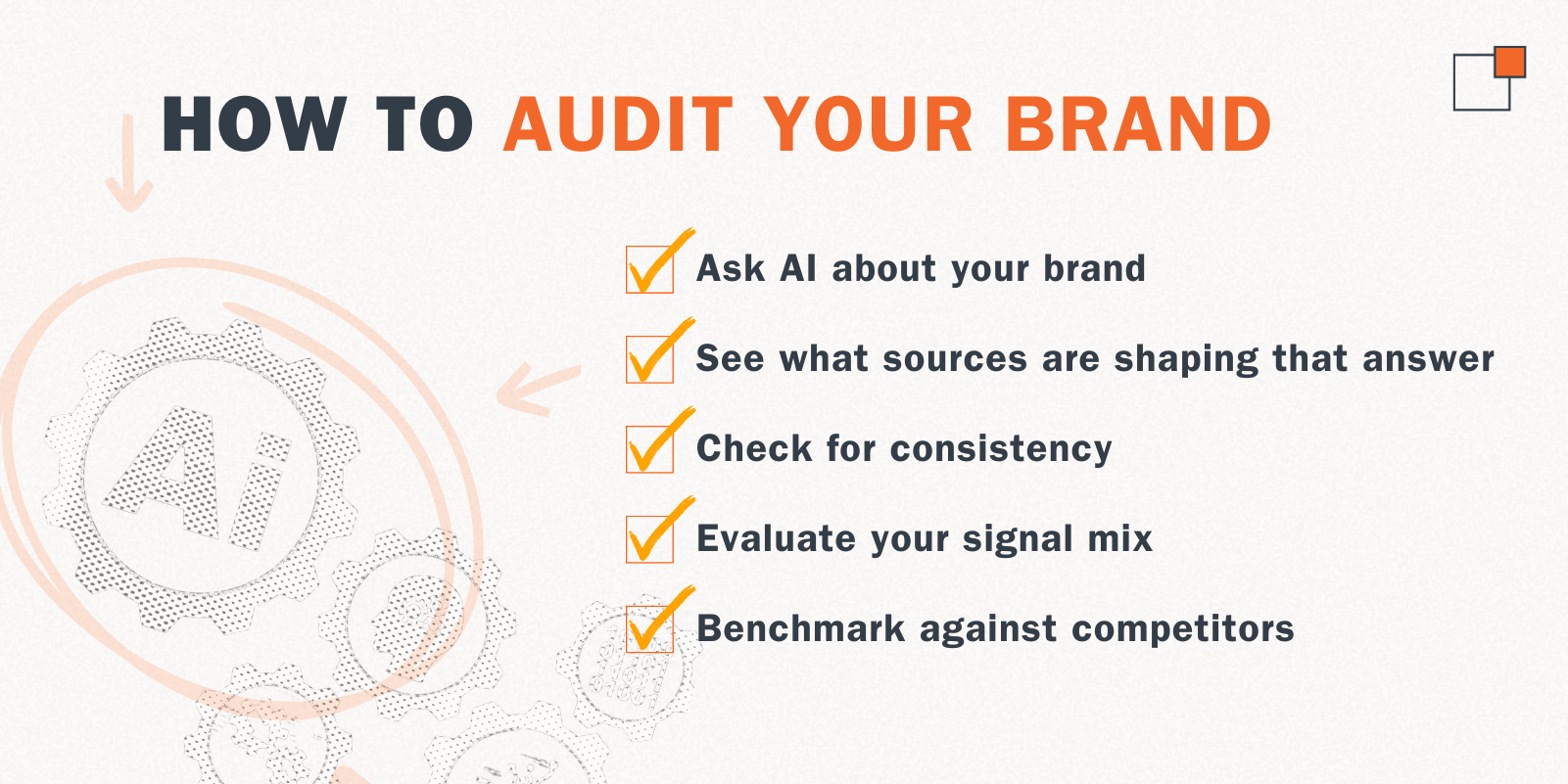
1) Ask AI about your brand and run searches your customers would:
- “What does [brand] do?”
- “[Brand] reviews”
- “[Brand] vs competitors”
Check ChatGPT, Perplexity and Google AI Overviews.
Look for: How you’re described, what’s missing and whether it feels accurate. If it’s vague or off, your signal is weak or fragmented.
2) See what sources are shaping that answer
Review citations and patterns:- Are review platforms showing up?
- Are forums like Reddit influencing results?
- Are there credible editorial mentions—or mostly your own site?
3) Check for consistency
Scan directories, review sites and social profiles. Look for:- Conflicting descriptions
- Outdated information
- Different positioning depending on the platform
4) Evaluate your signal mix
Map where you show up:- Original content and research
- Editorial or industry coverage
- Reviews and ratings
- Community conversations
- Owned channels
5) Benchmark against competitors
Search category and comparison queries:- “Best [category] tools”
- “[Competitor] vs [your brand]”
If competitors appear more often or with stronger language, AI will default to their narrative.
Reputation Management and AEO with thunder::tech
If this feels like a lot to manage, that’s because it is. What used to be a handful of channels is now a distributed reputation system; one that AI is constantly reading, interpreting and turning into answers about your brand.The good news is you don’t have to figure it out alone. thunder::tech helps brands navigate answer engine optimization (AEO)—identifying gaps, strengthening the right signals and making sure AI tells the right story about who you are and where you fit. Let’s talk about how we can help your brand.
Frequently asked questions
What is brand reputation management?
Brand reputation management is the process of monitoring and influencing how your brand is perceived online and offline. It includes managing reviews, creating authoritative content and ensuring your brand appears accurately and consistently across all digital channels.
Why does brand digital presence matter for AI search?
AI search engines like Perplexity and Google's AI Overviews pull brand information from dozens of sources simultaneously. A strong brand digital presence—consistent listings, original content and third-party mentions—increases the likelihood your brand is accurately and prominently represented in AI-generated answers.
Which underutilized channels have the biggest impact on brand discovery?
Community platforms like Reddit and Quora, podcast appearances and original research content tend to have the highest impact on brand discovery. These channels are frequently indexed by AI systems and carry authentic trust signals that polished owned channels alone cannot replicate.How do niche review platforms affect brand reputation?
Niche review platforms like G2, Capterra and Trustpilot rank independently for competitive keywords and feed data into AI-powered brand comparisons. Actively managing these profiles—responding to reviews and maintaining accurate information—extends your reputation management beyond traditional search.How often should I audit my brand's listing consistency?
Auditing your brand's directory and listing consistency at least quarterly is recommended. Inconsistent business names, addresses or descriptions across platforms weaken your local search signals and can cause AI engines to surface inaccurate brand information.Can thought leadership content on LinkedIn improve brand reputation?
Yes. Consistent executive publishing on LinkedIn builds institutional credibility and creates a human voice behind your brand. AI search engines increasingly reference LinkedIn content when generating answers about companies, making it a valuable but often overlooked component of brand reputation management.
About the Author
Gabriella Caldwell is a Senior Creative Marketing Strategist at thunder::tech. Outside of the office, she can be found in a ceramics studio sculpting away or visiting local art galleries.